

I grew up in South Africa, and for as long as I can remember, once a year, the whole country seemed to stop and watch a running race. The Comrades Marathon is one of the oldest ultra distance races. The Comrades is ~90km (55mi), run on the road between two cities. I remember watching the national television broadcast for hours - not only for the winners - the last runner to cross the line probably gets the biggest applause.
A mere 34 runners were at the starting line for the first race in 1921, to commemorate soldiers killed during World War I. Only 16 runners made time cap of 12 hours. The winning time was 8:59.
In 1923, the first woman, Frances Hayward, entered unofficially (women were not allowed) and finished in 11:35. That year, Arthur Newman won with a time of 6:56. The race was only opened to women and people from other race in 1975. The runner most famous when I was a child was Bruce Fordyce - winning nine times in the 80s.
The number of entries for 2026 is capped at 22,000. The winning time gap between the Downhill and Uphill races are much smaller these days - 2025 Downhill 5:25 and 2024 Uphill 5:25. The leading women trail behind men by a mere ~30min. For the nerds, more statistics here.
The Comrades “aims to celebrate mankind’s spirit over adversity” - Vic Clapman, founder. This sentiment perhaps, captures every Ultra run today as well.
My fascination with extreme distance running was piqued again when I learnt about Zach Bitter’s world record for 100-mile run (track) of 11:19 in 2019. Zach is amazing, he coaches ultra running, has a podcast called Human Performance Outliers where he interviews many interesting runners and other athletes, he also has a newsletter on Substack.
I have been secretly obsessed with ultra running, following runners and races ever since.
Ultra Running
Ultra races come in many different formats. They can be done on an athletic track, or on a road or on trails. The distances most common are 50km, 50mi, 100km and 100mi - and these have cut off time for completion. Some races are over multiple days, with the most well known include the Marathon des Sables in Morocco and the Grand to Grand Ultra in the U.S. Last man standing events - Backyard Ultras - do not have a predetermined distance or time, runners run loops until they decide they cannot run anymore.
Popularity for longer distance running is increasing, with over 8 000 runners entering the Ultra Trail run in the Blue Mountains of Australian in May of this year. I was there too, with hubby as emotional support. After a gruelling 6 months of training, I managed a respectable (I think) time of 9:20 for the 50km.
The discussion below, extracts data and conclusions from a Narrative Review by Knechte et al.1 (2026). The review analysed data from 62 studies focused on the performance aspect of the short-loop 24-hour race format.
The 24-hour race is typically done a 400m athletic track and runners aim to cover the longest distance in the time period. Today there are over 300 events of this format with 1000s of people participating.
Performance Trends & Sex Differences
The average distance covered the 24 hours is 150-160km (~100mi). The best runners achieve over 200km!
Many of the observations of this review can therefore be extrapolated to other 100-160km events.
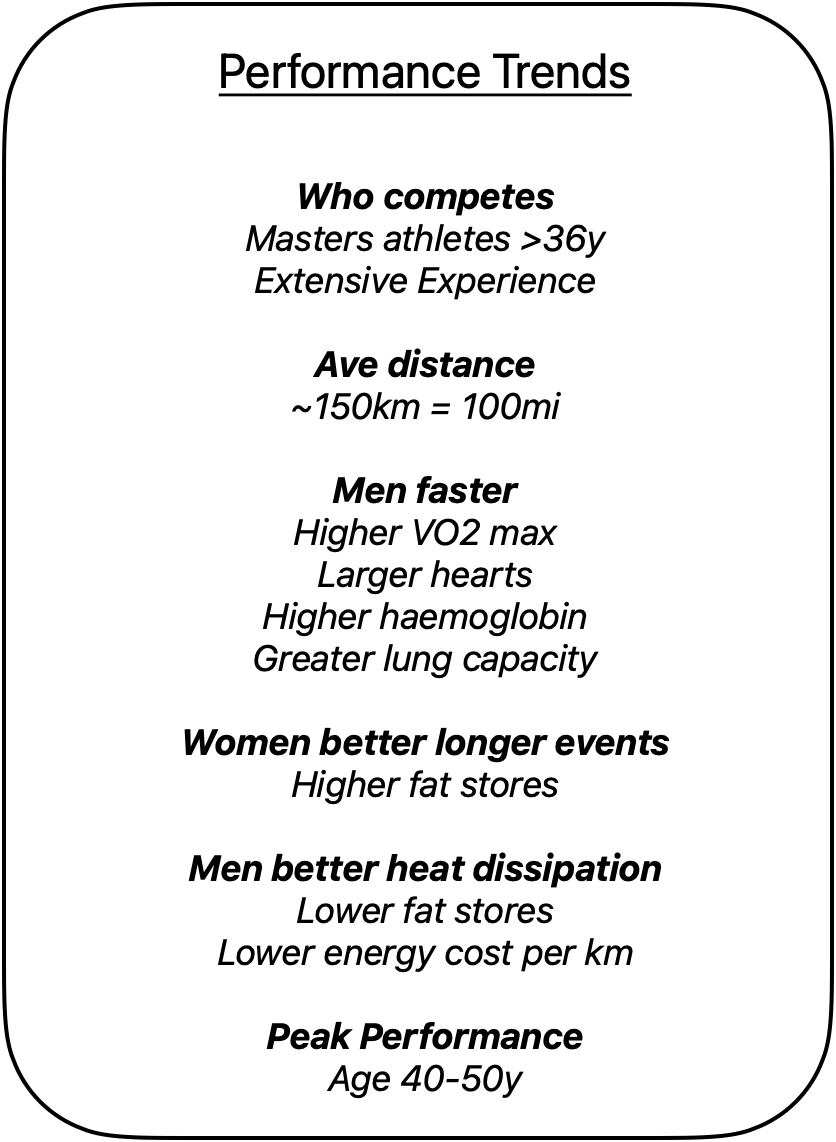
A few observations stand out:
Age of peak performance: 40 to 50 years
Men cover longer distances.
Women are catching up and the performance gap is shrinking.
Men run faster compared to women.
Larger hearts, higher haemoglobin and greater lung capacity contribute to higher achievable VO2 max for men and hence capacity to run faster.
In a 24h race, speed matters.
Women overall participation is increasing.
As age increases, the sex gap widens
the unanswered question is whether this is due to less women staying to compete as they get older or if women perform worse as they get older relative to the age-related decline performance seen in men
Over longer distances (>24h), women’s performance equal men
though not a 400m-track event, Rachel Entrekin (34y) recently won the Cocodona 250mi ultra trail race outright, beating Killian Korth by more than an hour.
Women are better at longer distances beyond 24h
Women have larger fat stores, perhaps creating the advantage in very long races
Men are better at heat dissipation
Lower fat stores
Lower energy cost per kilometre
Success Variables
Successfully completing a 24h-race requires physiological, psychological and strategic factors.
The ‘big three’ strategies for optimal performance are training, nutrition and pacing.
Other variables linked to success include body fat, VO2 max, lung function and running economy.
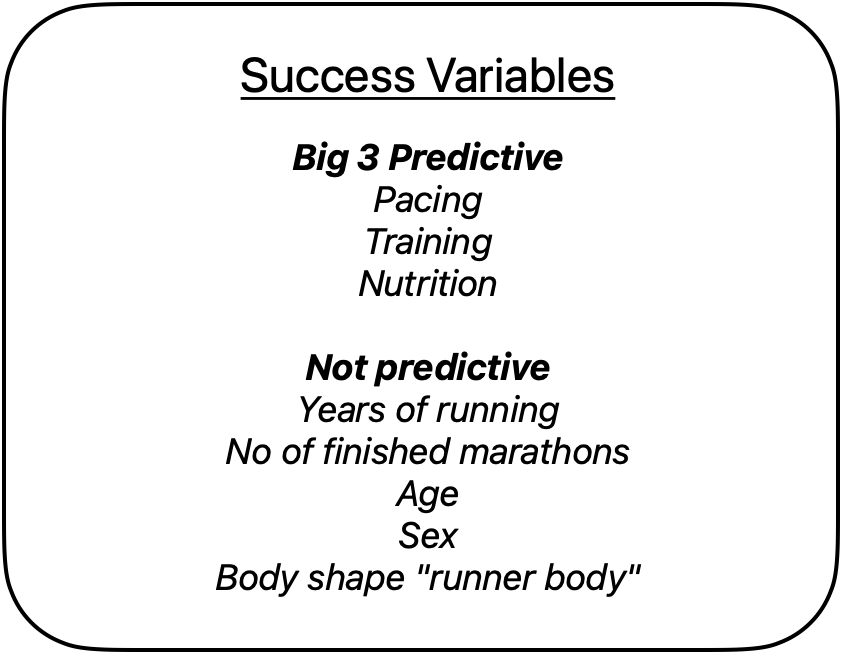
Predictive of success in 24h-race:
Prior experience, completing a 24h ultra
Best marathon time ~3h 20m
Longest training run >60km
Pacing strategies
Cognitive strategies to maintain mood stability
Not predictive of success in 24h-race:
Years of running
Number of finished marathons
Age & sex
Runner body shape
Training
The training program needs structure, consistent high-volume, with various pace and intensities run.
Compared to marathon training; ultras demand higher weekly mileage at lower intensities.
Back-to-back long runs over consecutive days are a key conditioning strategy to train running on tired legs and motivation is low. The long-run focus is more on “time-on-feet” than distance. This is especially relevant for ultra trail runs where pacing on steep hills are very different to flat.
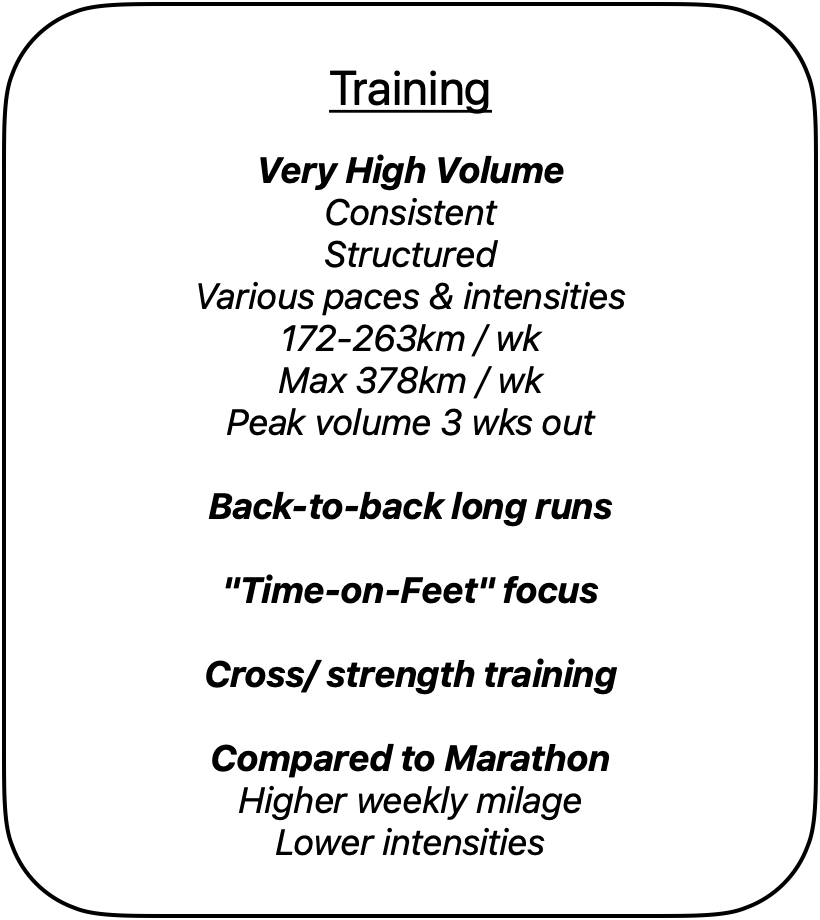
Cross training for strength is very important - especially if a trail race is planned.
Average weekly mileage: 172 - 263km
Maximum weekly mileage: 378km
Peak volume is 3 weeks out
Pacing
Distribution of effort varies during the race. In other words: how fast do you run and when to run faster or slower.
Sex, age and performance level impact pacing execution.
Most runners aim to run a bit faster covering more distance (60%) during the first half.
Elite runners starts at lower relative intensities. Compared to slower runners, elites have less variable pacing, maintaining a steady pace for most of the time and slow down less in the last quarter. Elites recover better from surges.
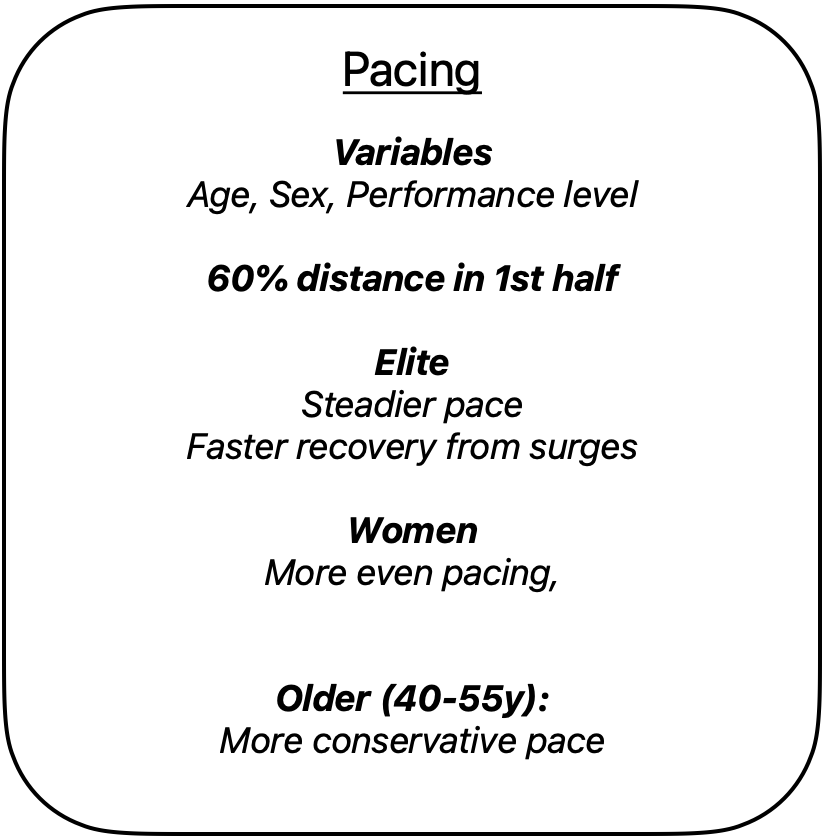
Compared to men, women tend to be better at maintaining an even pace throughout with less late race slow-down. Men start faster, have a higher mean speed and slow-down more. Some studies show no difference between men and women.
Unsurprisingly, older athletes (40-55y) have a more conservative pacing strategy.
Fluid Intake
The Comrades is also (in)-famous for another reason.
A woman nearly died competing in the 1981 Comrades. She was admitted to hospital and treated for “dehydration” with 2 litres of IV isotonic fluid - the standard practice at the time. Within hours she suffered a grand mal seizure and lapsed into a coma. Blood testing revealed severe Exercise-Associated Hyponatraemia (EAH) with sodium levels of 115 mmol/ L (normal >135mmol/L). She eventually recovered completely.
This was the first known case for Exercise-Associated Hyponatraemic Encephalopathy, and sparked a case report by Noakes et al.2. It highlighted the increased risk for water-intoxication during long races where isotonic water is freely available coupled with recommendations were to drink even if they were not thirsty. Frizzell et al. reached a similar conclusion in 1986. This incident motivated Prof Noakes to write the seminal book on endurance hydration, Waterlogged, challenging the old hydration dogma of drinking lots of water and frequently.
In other words, drinking too much plain or isotonic water will shift sodium out of your cells into blood circulation, leaving your cells dehydrated.
This knowledge and advice was slow to reach race organisers and runners3. In 1987, a total of 16 runners were admitted for treatment after the Comrades race. Other races were not immune to the EAH events, and include the Valley of Giants marathon in California in 1993, Chicago marathon in 1998. Of the 15 000 Boston marathon finishers in 2002, a total of 1 900 runners were estimated to have developed EAH with about 90 critical4.
Fortunately, the incidence of EAH in the 24h-smaller loop race format is fortunately very low.
Successful runners plan and monitor their fluid and sodium intake with great care to minimise the risk of fluid overload and hyponatraemia.
However, prevalence of EAH due to over-drinking is very-high in other Ultra race formats. Risk populations include inexperienced runners, (older) females and luteal phase menstrual cycle during race.
Remember that the kidneys filter all the blood in your body - 7.5 litres of blood is pumped through the kidneys per hour. The physiological kidney response to excess fluid is to increase aldosterone, cortisol and antidiuretic hormone (ADH) (called vasopressin for US readers) and decrease atrial natriuretic peptide (ANP). A cascade of effects called the renin-angiotensin-aldosterone system (RAAS) come into effect to try to bring the body back into balance. The RAAS is a complicated mechanism of regulating blood volume, electrolyte homeostasis and blood pressure will take up too much space to discuss here. Interested readers can find more information here or here.
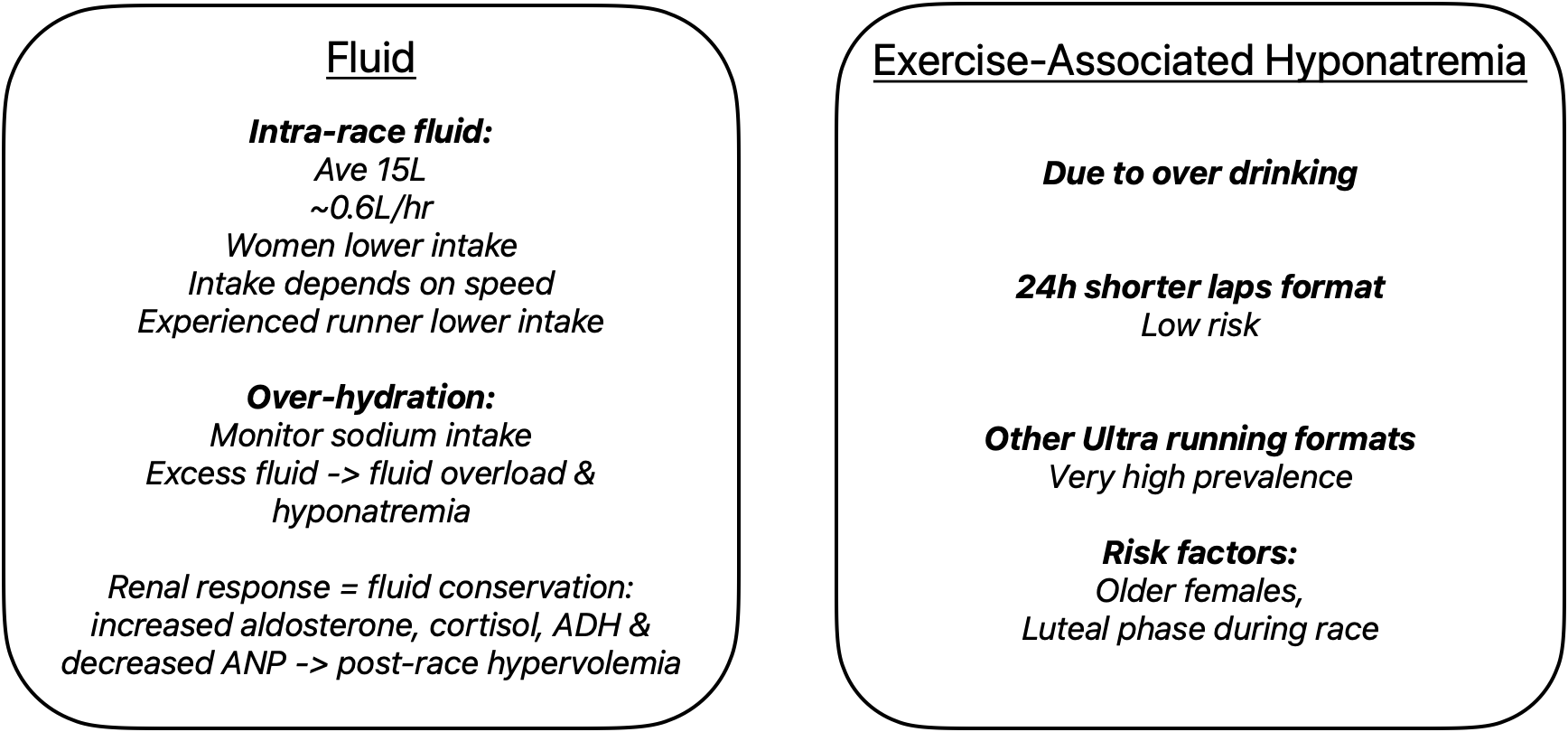
The review found that the average intake over 24-hours was 15 litres (0.6L/hr), though some studies reported as low as 9 litres.
Women tend to drink slightly less.
Fluid intake depends on running speed.
Experienced ultra-runners drank less compared to less those with less running-experience.
Nutrition and Energy Intake
Despite recent advances in race nutrition strategies, running for 24 hours leads to an energy deficit - more energy is spent than is consumed. Higher energy intakes correlates with better performance.
Pre-race carbohydrate intake is around 7g/ kg of body weight. Total energy intake intra-race was found to average around 8 400cal. Some athletes ingest as low as 4 700cal and the highest intake was 12 000cal. Most athletes consumed ~50g/ hr.
Every runner knows, you need to train your gut to handle food while moving. This is difficult enough over a 4-hour marathon time but much more complex over 24 hours. Even if you practiced and have a few favourite items that you like to consume over 6-7 hours, your tastebuds, brain and gut might simply disagree with your plan after many hours.
Energy intake during the race:
Average 8 400 calories
~50g/ hr
In 2019, during the 24h World Championship Charlot et al.5 followed 12 French athletes and showed that almost all failed to adhere to the nutrition plan in the later stages. Runners reduced their planned items by 50%. However, they made up for this shortfall by consuming unplanned items on offer from the supply tent.
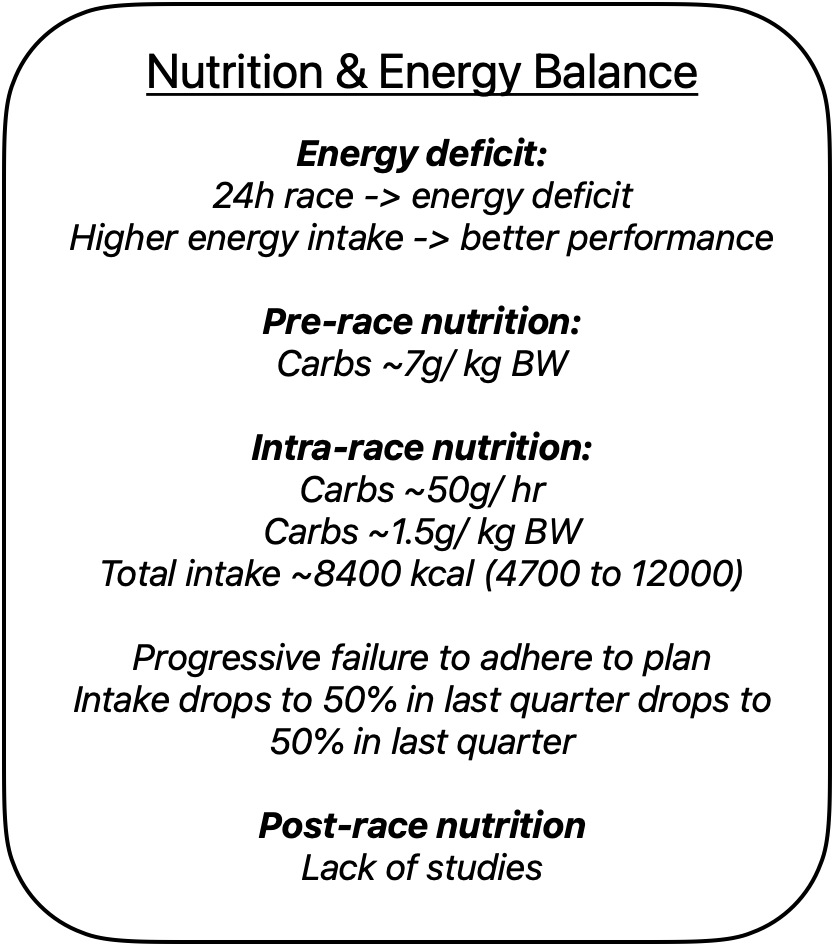
Palate fatigue and gastrointestinal symptoms including nausea are the main reasons why runners stop consuming planned items of gels and liquids. This highlights the importance of having a wide variety of food items on offer during ultra races.
The review found no studies covering the post-race nutrition strategies to enhance recovery. I have some thoughts here that I will cover in future.
Physiological Effects of 24-h Ultra Race
There are many studies highlighting the negative effects on the body as a result of long endurance events like ultra-running, triathlons and cycling events.
Loss in body mass is due to dehydration, skeletal muscle breakdown and high rates of fat oxidation. Many cardiovascular biomarkers are abnormal (troponin, creatine kinase, ECG and echocardiography). Similarly, kidney function shows signs of impairment with elevated serum creatinine and blood urea nitrogen. The latter is a sign of extreme muscle breakdown (rhabdomyolysis).
From the runner’s perspective the gastrointestinal symptoms predominate the running experience: nausea, bloating, abdominal pain and diarrhoea. Contributing factors include nutrition (gels), reduced blood flow to the gastrointestinal tract and mechanical stress that reduce gastric emptying rate. Biomarkers for intestinal permeability are increased.
Though the immune system is negative affected immediately post-race, experienced runners actually show favourable adaptation.
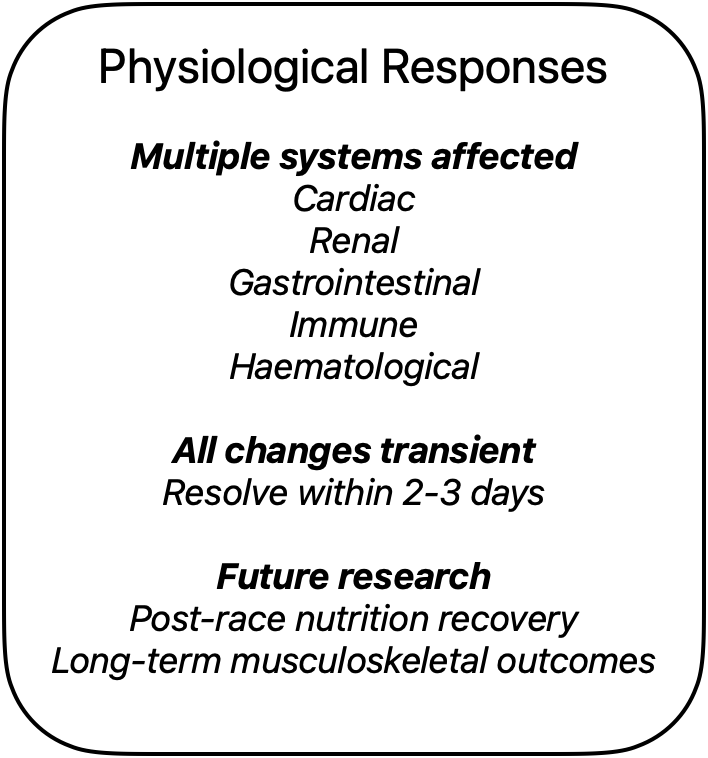
Haematologically, red blood cells and hematocrit are reduced while white blood cells are increased.
The endogenous antioxidant defence system is overwhelmed. While less trained runners suffer higher lipid peroxidation (damage to cell and mitochondrial membranes), higher protein oxidation and increased DNA damage.
Estrogen has intrinsic antioxidant properties to help stabilise membranes and reduce free radical damage. Hence, post-menopausal women and men have higher oxidative stress loads. As we age, our antioxidant capacity lowers and older runners take longer to recover from oxidative stress.
WHAT is important to note is that all these negative effects are short lived. Most of the markers return to baseline within 2-3 days, while some may take as long as two weeks.
Last Thoughts
It takes a special type of person to sign up for a 24-h run around an athletic track. Personally, I would found looking at the same scenery for hours soul destroying.
Many more people sign up for ultra events that go from point to point, like the road race, the Comrades, or in one big loop, like the Ultra-Trail du Mont-Blanc and other UTMB events. Compared to half- and marathon races, Ultras are less speed focused for the majority of participants, and hence feel more inclusive. “People are much more friendly”, is something you hear often from first timers.
The review found master athletes, >35y, dominate the Ultra performance space. Older athletes have in depth experience of race strategy (pace, nutrition and hydration). They have refined psychological resilience and a deep understanding of how to manage fatigue and discomfort that have accumulated over decades.
Younger and faster runners that transition from shorter distances, will no doubt still be fast in Ultras - and this advantage will serve them well as they accumulate experience over years.
Psychological factors play a not small role in all endurance events. A few points are worth noting:
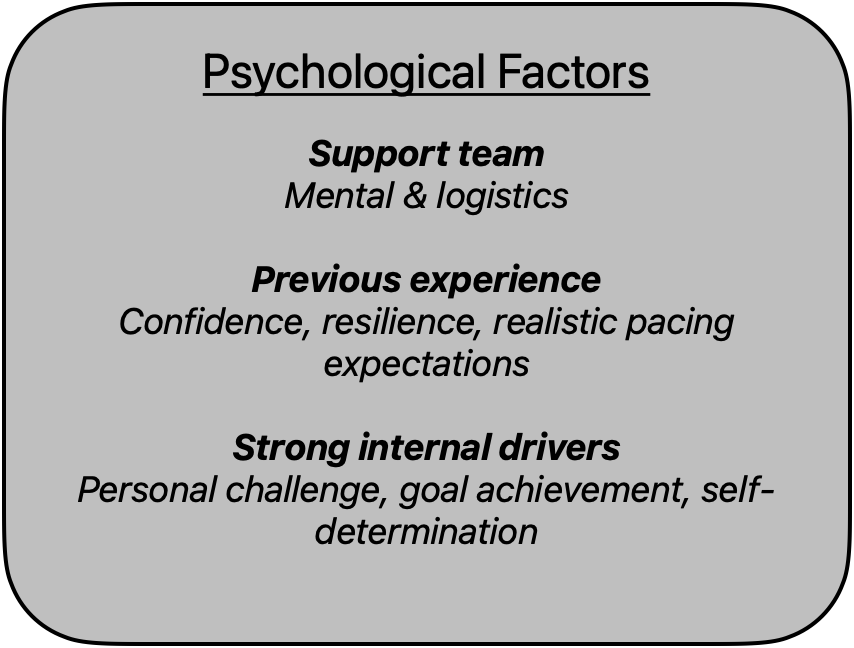
Support team is crucial for mental reinforcement, encouragement and logistical assistance
Previous experience is invaluable to consolidate confidence, resilience and realistic pacing strategies
Motivation extends beyond individual drive - experience and crew support help sustain effort under extreme physical and psychological distress.
Runners have strong internal drivers encompassing a sense of personal challenge, goal achievement orientation and self-determination. It helps to be a little bit stubborn!
There is a huge gap in research about the long-term effects on the musculoskeletal system and better recovery strategies from a nutrition and physical perspective.
Sign up for an event that seems daunting - you may surprise yourself!
In the words of Micheal Easter, “do hard things”.
Knechtle, Beat et al. “24-Hour Ultra-Marathon Running: A Narrative Review of Performance Factors and Physiological Impacts.” Sports medicine - open vol. 12,1 32. 17 Mar. 2026, doi:10.1186/s40798-026-00997-z
Noakes TD, Goodwin N, Rayner BL, Branken T, Taylor RK. Water intoxication: a possible complication during endurance exercise. Med Sci Sports Exerc. 1985 Jun;17(3):370-5. PMID: 4021781
Noakes TD, Speedy DB. Case proven: exercise associated hyponatraemia is due to overdrinking. So why did it take 20 years before the original evidence was accepted? Br J Sports Med. 2006 Jul;40(7):567-72. doi: 10.1136/bjsm.2005.020354. PMID: 16799109; PMCID: PMC2564296.
Almond CS, Shin AY, Fortescue EB, Mannix RC, Wypij D, Binstadt BA, Duncan CN, Olson DP, Salerno AE, Newburger JW, Greenes DS. Hyponatremia among runners in the Boston Marathon. N Engl J Med. 2005 Apr 14;352(15):1550-6. doi: 10.1056/NEJMoa043901. PMID: 15829535.
Charlot K, Lavoué C, Siracusa J, Chalchat E, Hertert P, Bourrilhon C. Fluctuations in food and fluid intake during a 24-h World Championship: analysis of the deviation from nutritional programs. J Int Soc Sports Nutr. 2022;19(1):92–109.