

Musings
(Things I think about that don’t fit anywhere)
Make time for your friends, otherwise they might not be there when you need them.
Inflammation
We all get sick or injured at some point. Resolving the acute inflammation that comes with it, is one of your body’s major miracles. Acute inflammatory responses are protective and are self-limiting. The initiation phase is followed by the resolution phase with “a temporal crescendo to resolution and decrescendo of initiation chemical mediator gradients”, from Serhan and Levy (2018)1.
Like all processes in the body, the building blocks are crucial. Sometimes, inflammation can linger and it could be due to lack of substrates, interrupted cellular signalling or something else.
The most commonly recommended strategy by medical practitioners, to resolve a new or nagging injury, is to take NSAIDs. This does certainly lower the pain - while you are taking it. But does it also slows down the actual healing process?
On the other hand, ‘natural or alternative’ practitioners will frequently recommend eating fish, and supplementing with fish oil and its derivatives, EPA & DHA to help lower inflammation. The latest fish oil derivative product is called SPMs. It is a step closer to the actual resolving of inflammation and works really well (in my experience).

SPMs are very expensive at the moment due to the fragile nature of its compounds that make the manufacturing very difficult. I was also recently told by a Biomedica Rep that there are trademark and licensing issues at play as well, making it expensive and difficult to produce.
But First: An Analogy for Inflammation
No analogy is perfect, allow me some artistic licence.
Imagine you have a 100 balloons in a small blow-up pool surrounded by water. Each balloon is filled with a soft jelly.
The balloons are quite pliable and squishy - you can change the shape to some degree with a bit of external pressure. There are attachments anchored to the outside and inside of the balloon wall, some have bits on both sides - let’s call them (jelly) Snakes. The Snakes have different colours to signal their special messenger roles. Some messages are for making new balloons, some for repair, others for making cool stuff like energy.
Inside the balloons, suspended in the jelly, is a whole lot of sweets: Skittles, Smarties, Tic-Tacs, M&Ms - it is your balloon, fill it up. Everything has a unique job: some make stuff, some repair, others send messages to the other sections inside the balloon or to the outside.
When the outside of the balloon gets damaged, the jelly will leak out and so can some of the sweets on the inside. If the damage is small and it is a slow leak, the balloon could repair itself. If the damage is extensive, all the contents will spill out and contaminate the pool water. This balloon is now defunct and will be written off. The contamination is clearly not good for the environment of the other balloons.
The Snakes on the damaged and undamaged balloons sense the injury and contamination and spring into action. They can themselves detach from their place, put on their Alarm uniforms and run around screaming for help. In the process escalate the contamination. Some Snakes are excellent Tradies and help repair the injured. Some can also send messages to the inside of the balloon to either release repair other Tradies or set up processes inside to protect against more damage.
As the pool water gets more murky and with excess stuff in the water, friction increases and this produce heat. All the balloons are unhappy, squished too close together and the pool is not in a position to perform its job.
EPA agents monitor the pool water quality and recruit specialised Clean-up-crews in the case of contamination. Sometimes there are too many EPA agents and not enough Clean-up-crew. This makes the situation worse for a while. A few special Snakes from the injured and uninjured balloons help direct the decontamination process calling for more Clean-up-crew, Tradies help with repair and send some of the EPA agents back the office.
Outside interference can make the decontamination process more efficient (or sometimes worse). With extensive damage and high levels of contamination, the EPA and Clean-up-crew can get overwhelmed. The pool Manager can help by throwing in chlorine, anti-acids or stabilisers in the water. The chlorine dissolve some the debris. The anti-acids prevent more Snakes from detaching. The pool water is clearer, less stuff in the water means less friction and less heat. The contamination escalation is capped. The balloons in the pool can get on with their job.
On the other hand, an over-vigilant pool Manager can throw chlorine or anti-acids in the water when the damage is minor and already contained. The pool water is clearer, the EPA agents are happy and send the Clean-up-crew home.
EXCEPT for one thing.
By preventing the Snakes from detaching, sending messages and helping with the repair - the whole repair process is slowed down. Only a few circulating Tradies and way-ward Clean-up-crew are left to do the repair. And this can take a very long time.
The Inflammation Cascade.
My readers are very smart and you have all figured out that the balloons and the process refer to cells, tissue, injury, inflammation and repair.
In the previous newsletter, I explained the why, what and where of Essential Fatty Acids (EFAs). See image below as a quick refresher:
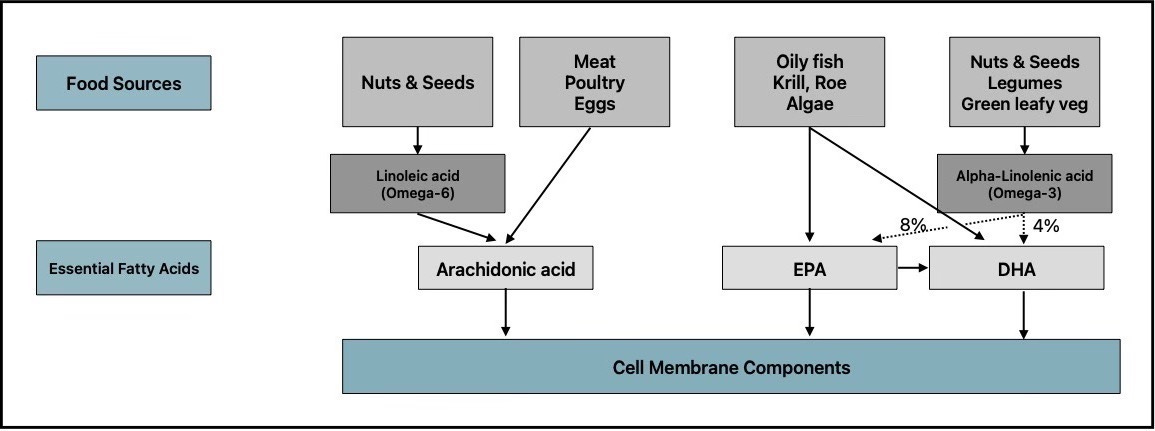
In the analogy above, the Snakes imbedded in the balloon wall refer to AA, EPA and DHA stored in the cell membrane. The pool water is the fluid that surrounds cells and tissue.
An injured cell release contents, contaminating the surrounding fluid with debris leading to pain, heat, swelling and loss of function.
Injured cells release cellular contents into the extracellular fluid (pool water). And this attract more fluid and inflammatory molecules, leading to swelling and pain. The nerve endings in the area are irritated by the pro-inflammatory chemicals and increased pressure. If this is a joint or muscle injury, the area can feel warm, swollen and movement is restricted.
Definition of Inflammation: A normal part of the body’s response to injury or infection. Inflammation occurs when the body releases chemicals that trigger an immune response to fight off infection or heal damaged tissue. Once the injury or infection is healed, the inflammatory process ends. Chronic inflammation is an abnormal immune response in which the inflammatory process does not end when it should or may begin when there is no infection or injury. From NIH
In the first step of the inflammatory cascade, PLA* enzymes are activated and release Arachidonic Acid (the Snakes) from the cell membrane. In the second step, different enzymes - LOX* and COX-1* and COX-2*, metabolise the Arachidonic Acid into Leukotrienes, Prostaglandins and Thromboxanes. These are the Snakes in their Alarm uniforms, running around and screaming for help - generally causing chaos. These pro-inflammatory molecules are collectively referred to as Eicosanoids and are responsible for heat, swelling and pain.
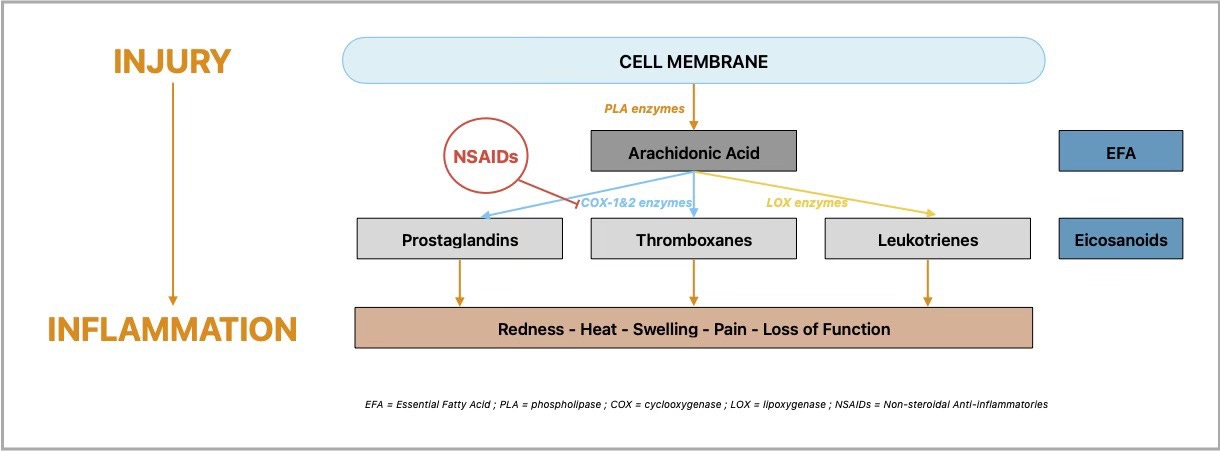
The EPA refers to the immune system, responsible for monitoring the environment of tissues and sending special cleanup and repair molecules. One of the first responders are polymorphonuclear leukocytes (PMNs) - a type of white blood cell. Their job is to phagocytose (gobble up) microbes and cellular debris, neutralise and clear invaders. When there are too many PMNs they inadvertently create tissue damage and amplify inflammation.
And as everybody knows, the immune system can be prone to overreaction, leading to chronic inflammation.
Uncontrolled inflammation is associated with arthritis, periodontal disease, Irritable Bowel Disease, Cardiovascular disease, asthma, cancer, metabolic syndrome and autoimmune conditions.
You are the pool Manager, you can send help by resting, eating enough protein or taking medicine and supplements.
If you take NSAIDs, the COX enzymes are blocked and reducing the amount of pro-inflammatory molecules that are produced. Inflammation and pain is lowered.
(*Note: PLA = phospholipase, LOX = lipoxygenase, COX = cyclooxygenase)
The Clean-up: Resolving the Inflammation
At a certain threshold of inflammatory molecules, another set of signalling is initiated. It is important to know that you NEED a certain amount of pro-inflammatory molecules for the Resolving phase of inflammation to start in full force.
Many of the same enzymes mentioned above and others are called to action. The PLA enzymes release AA, EPA and DHA from the cell membrane. Remember these are the Essential Fatty Acids (EFA) that we have to get from our diet (or supplements) and is stored in our cell membranes.
In the second step, LOX, COX-2, and P450 enzyme metabolise the AA into Lipoxins, the EPA into Resolvin-Es and the DHA into Resolvin-Ds, Protectins and Maresins. Collectively these metabolites are called Specialised Pro-resolving Mediators (SPMs).
Definition of SPMs: 3 separate biosynthetic and potent mediator families called Resolvins, Protectins and Maresins that stimulate self-limited responses, enhance innate microbial killing and clearance, are organ protective and activate endogenous resolution programs.
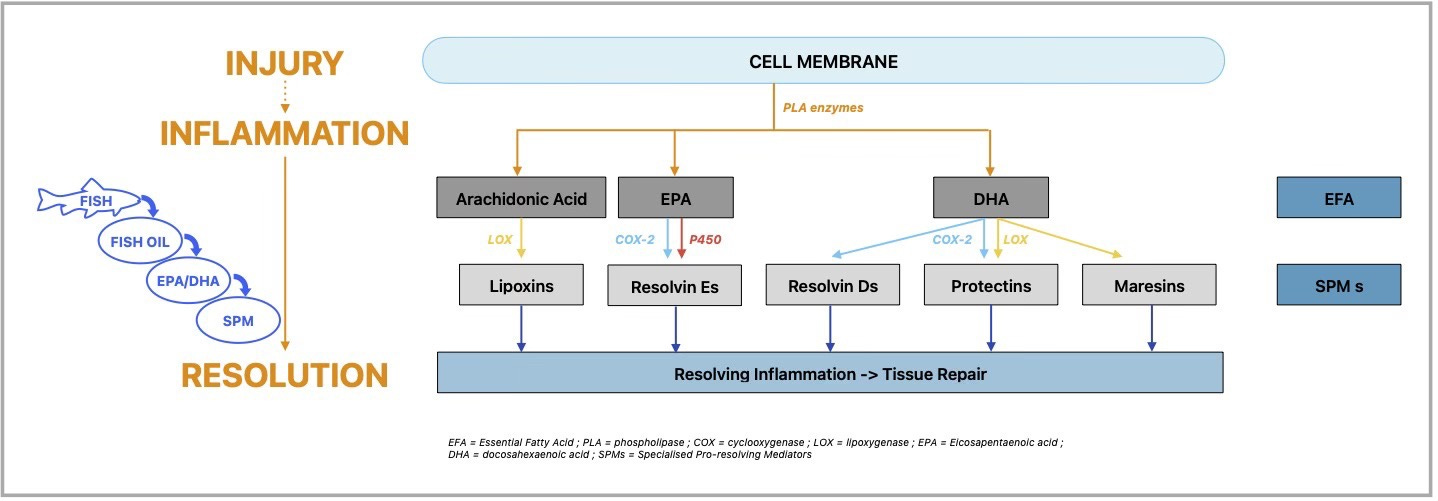
The exact mechanisms of how the SPMs work is beyond the scope of this article. If you are interested, one of the best papers are by the Charles Serhan who discovered the SPMs.
In short, the pro-inflammatory molecules, leukotrienes (from figure 2), change into lipoxins with the help of LOX enzymes. This acts as a stop signal to PMN recruitment, and marks the beginning of the resolution phase.
SPMs selectively regulate pro-inflammatory molecules, increase white blood cell apoptosis for clearance, control T-cell differentiation to lower expression of pro-inflammatory cells and enhance humeral immunity by increasing memory B-cells.
The marine oil derivatives, EPA and DHA actively promote resolution by stimulating macrophage uptake of debris. Macrophages are white blood cells that work like little Pac-Mans, gobbling up debris. They also induce PMNs apoptosis (cell death) and help reduce pain and increase tissue regeneration.
SPMs shorten the duration of peak inflammation and reduce PMN infiltration by up to 50%. Without SPMs, inflammation can remain at high levels without resolution.
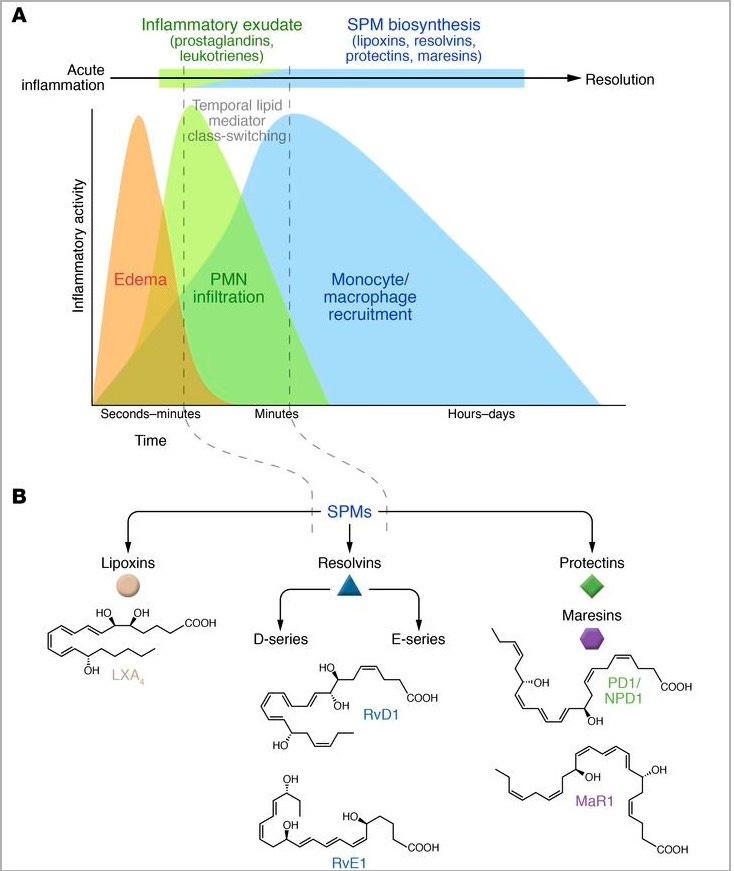
A Bit More about SPMs
While NSAIDs and other COX-2 inhibitors, can lower the peak of inflammation, it tends to extend the timeframe for the resolution phase by 50%. In other words, there is less inflammation and the resolution phase takes longer. Athletes that take ibuprofen before competition, block the production of resolvins and lipoxins that naturally increased in the recovery phase of strenuous exercise.
Interestingly, there are medications that help the resolution phase including, aspirin and glucocorticoids.
SPMs play protective roles in brain and neurological processes including down-regulation of b-amyloid production, enabling functional recovery in spinal cord injury and ischemic stroke. SPMs reduce post-operative pain via TRP ion channel modulation and spinal cord synaptic transmission.
SPMs reduce disease activity in Rheumatoid Arthritis.
The therapeutic opportunities for SMPs are vast. Disease models currently being investigated include periodontal2, dysbiosis, colitis, sepsis, burn wounds, arthritis, skin inflammation, cancer34, neuroinflammation, heart disease5, vascular disease, TBI6, surgery7 and asthma.
The vagus nerve controls inflammation peak by regulating SMPs. Acetylcholine (a neurotransmitter) release from the vagus induce LOX enzymes to produce protectins.
The underlying message here is that chronic high levels of psychological stress and hamper the resolution phase. Find a way to actively increase your stress resilience and improve recovery.
Where to Get SPMs
Eat your daily fish :)
A food first approach is always best: salmon, mackerel and sardines are excellent options.
Low levels of fish intake and the “Western diet” reduce the body’s capacity to produce SPMs. SPMs can be produced by many organs. Fish consumption increase plasma SPMs. Salmon contains resolvins - ready made SPMs.
You can supplement with fish oil or EPA/DHA or SPMs.
Fish oil gel caps are the most affordable option. Quality matters, fish oil and can become rancid in poorly controlled manufacturing and shipping. Please keep it in the fridge.
For overall health support, I recommend a daily combined EPA/DHA supplement providing a minimum of 1g. This is typically 3 gel capsules and they can be quite big. The actual EPA and DHA content per capsule can vary widely in different products. Read the fine print to calculate how many capsules you need to take. The quality is important here as well, choose a reputable brand.
SPM supplements are newer on the market. You need fewer capsules and they are smaller. They are also more expensive. In Australia SPMs are only available as a practitioner prescribed product - a naturopath, clinical nutritionist or similar. Available options are Metagenics SPM Active and Bioceuticals Clinical UC Promega. They are more freely available in the USA and UK and options include Metagenics SPM Active and Designs for Health SPM Supreme. As always, for all things supplements on-line, iHerb is a go-to option.


SPMs work really well for acute sports related injuries. If you are taking it for general health purposes, you will not notice the difference between SPMs and EPA/DHA capsules.
About Estelle
Estelle obtained her Bachelor of Biomedical Science in 2017 and a Bachelor of Health Science Nutrition & Dietetic Medicine in 2020. She is also a qualified breath coach. Estelle sees patients for a variety of complex problems including insomnia, cancer, mould, fatigue and chronic illnesses.
References
Serhan, Charles N, and Bruce D Levy. “Resolvins in inflammation: emergence of the pro-resolving superfamily of mediators.” The Journal of clinical investigation vol. 128,7 (2018): 2657-2669. doi:10.1172/JCI97943
Keinan, David et al. “Understanding resolvin signaling pathways to improve oral health.” International journal of molecular sciences vol. 14,3 5501-18. 8 Mar. 2013, doi:10.3390/ijms14035501
Sulciner ML, et al. Resolvins suppress tumor growth and enhance cancer therapy. J Exp Med. 2018;215(1):115–140.
Zhong X, Lee HN, Surh YJ. RvD1 inhibits TNFα-induced c-Myc expression in normal intestinal epithelial cells and destabilizes hyper-expressed c-Myc in colon cancer cells. Biochem Biophys Res Commun. 2018;496(2):316–323.
Gebauer, Sarah K et al. “n-3 fatty acid dietary recommendations and food sources to achieve essentiality and cardiovascular benefits.” The American journal of clinical nutrition vol. 83,6 Suppl (2006): 1526S-1535S. doi:10.1093/ajcn/83.6.1526S
Erdman J, Oria M, Pillsbury L, eds. Nutrition and traumatic brain injury: improving acute and subacute health outcomes in military personnel. Washington, DC, USA: National Academies Press; 2011.
Uno H, et al. Immunonutrition suppresses acute inflammatory responses through modulation of resolvin E1 in patients undergoing major hepatobiliary resection. Surgery. 2016;160(1):228–236.