

29 March 2024
Happy Easter
I did not grow up with chocolate at Easter. There was no Easter Bunny and certainly no chocolate hunt in the garden. For my family it was more a religious event to celebrate and go to church. To be honest, the obsession with ‘as much chocolate as you can’ feels a bit over the top. Moving countries means you have to adapt to new culture. At Easter, I compromised on the chocolate thing. I will bake a really good chocolate cake of some description. Sometimes it is a Chocolate Mudcake (also a new country thing), other years more old-fashioned chocolate cake. My favourite chocolate cake is a Torta Caprese and happens to be gluten free (recipe below).
And I buy everyone in the family ONE Easter Bunny chocolate of the best quality that I can find. If you have to eat chocolate, make sure the quality is exceptional. The cheaper small Easter Eggs that are so ubiquitous, are in my opinion just not worth it.

Recent Podcast I loved
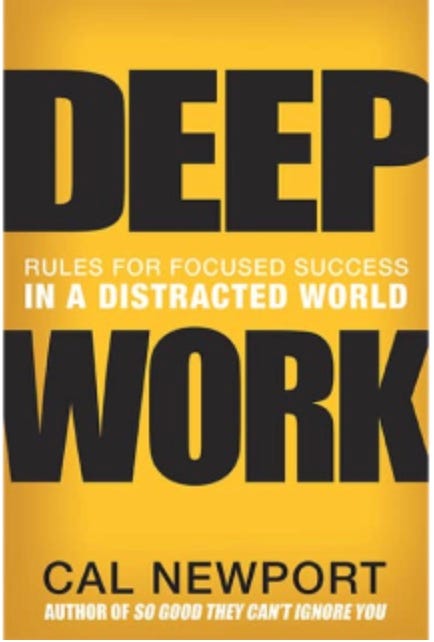
Huberman Lab Podcast, 11 March 2024 with Dr. Cal Newport: How to Enhance Focus and Improve Productivity.
I am a big fan of Cal Newport, who is best known for his book Deep Work (which he wrote when he was 21!). Click here to see a list of all his books, the latest is titled Slow Productivity. Cal is a professor of computer science at Georgetown University in the USA and writes about the intersections of technology and quality work. He strives to find a way to do exceptional quality work in an environment rich with distractions. You can find him online at thedeeplife.com where he posts video-podcast episodes.
The podcast with Andrew Huberman starts with his approach to study and learning - very applicable for late high school and university. The middle section covers his philosophy about using and not using technology. The last third of the podcast focus on being more productive at work and how to structure your day in oder to do quality work.
I really like his thinking. He is a real, everyday person - like you and me. He is not living off-grid with no tech and no other human interaction. He lives in the real world with all the technology and associated distractions. You do not have to read his books to understand where he comes from and his main message - this podcast will give you a really good understanding of his philosophy and approaches.
Even if you only use one or two of his approaches, you will feel more in control in a world that is increasingly distracting us from quality thinking.
Chronic Alcohol and Nutrient Deficiencies
Moderate drinking is generally defined as one drink per day for women and two for men1. This is a total of seven and 14 drinks per week for women and men respectively. Anything more than that is considered heavy drinking.
Chronic alcohol ingestion leads to low levels of vitamins and minerals through several mechanisms. The first is through by reducing the absorption of nutrients in the small intestine.
These include vitamin A, vitamin B1, vitamin B2, folate, vitamin C, and the minerals selenium, iron, magnesium and zinc2.
Magnesium deficiency is also common3. Magnesium is an essential mineral and act as a cofactor in more than 300 enzymes involved in muscle contraction, nerve conduction, blood pressure, bone mineralisation and blood glucose levels.
Alcohol increase the break down of vitamin A, impairing night vision and increase risk of liver disease. Deficiencies in B-vitamins and iron lead to symptoms of fatigue, depression and irritability.
Alcohol is essentially toxic for many cells in the body. The liver is responsible for neutralising ingested toxins like alcohol, medicine even some foods, through enzymatic processes. Other cells have the ability to metabolise (neutralise) toxins as well, but the liver does most of the heavy lifting. The enzyme, alcohol dehydrogenase (ADH), is responsible for the first of two steps of neutralising alcohol4. Variations in the ADH gene (ADH1B*2 and ADH1C*1) make some people less tolerant to alcohol than others. These gene variations have a high prevalence in Jewish and Asian populations. There are two other pathways involved in alcohol metabolism, the cytochrome P4502E1 (CYP2E1) and catalase5. The P450 and catalase pathways play a minor roles in moderate and low intake on alcohol.
ADH oxidises alcohol to form acetaldehyde in step 1. In step 2, the enzyme aldehyde dehydrogenase (ALDH) oxidise acetaldehyde to acetate. The acetate is exported from the liver, distributed to cells, converted into acetyl-CoA before it enters the energy production cycle. It is probably easier to see this in figure 1 below.


All enzymes need cofactors to work. Cofactors are typically vitamins and minerals. As an analogy, imagine the enzyme is a food processor and the electrical switch is one cofactor and the blade is another. Without the electrical switch or the blade, the food processor will not work. For ADH the cofactors needed are NAD and zinc. Nicotinamide adenine dinucleotide (NAD), is a form of vitamin B3, also called niacin. Strictly speaking the zinc is not a cofactor as such, but forms the part of the structure of the enzyme.
It is not surprising that heavy drinkers are at high risk of zinc deficiency. Low zinc status can lead to apathy, lack of appetite and lethargy. It will also increase susceptibility to infection. Zinc is important for cell growth, repair, taste sensation, the action of insulin and many more function 6.
Zinc deficiency reduce testosterone production, in men and women 7 8. Testosterone is associated with low motivation, low energy, decreased sex drive, decreased bone density, fatigue, increase anxiety and increased risk of obesity 9
Alcohol ingestion decrease the level of glutathione, one of the main antioxidants in our cells. Low antioxidants increase free radical (ROS) and this can lead to cell damage in various ways. Supplementation of acetyl-cysteine (NAC) can increase glutathione levels.
Most people know that alcohol leads to temporary dehydration. This together with the toxin build up is responsible for the hang-over associated headache.
What can you do?
From a purely nutritional perspective, make sure to eat enough protein and vegetables to cover the basics of macro- and micronutrients.
Strategic supplementation* can help:
a good B-complex vitamin, daily
zinc, specifically on days after alcohol (10-14mg elemental)
magnesium, daily as most people do not get enough through diet (300-400mg)
NAC as precursor to glutathione, the night after and the following day (~600mg per dose)
taurine, the night and day after to help with cellular hydration (1000-3000mg)
electrolytes, sodium and potassium. I like Sodii in Australia and LMNT for North America
It is a good idea to test zinc levels. Brining zinc levels within optimum range can take a few weeks. Once levels are optimum, take a daily maintenance dose.
*Please note the supplementation doses are rough guidelines base on RDI values. Please consult a professional before supplementing.
Torta Caprese Recipe
Ingredients:
200g butter
200g good-quality dark chocolate (I use 80% Lindt)
4 eggs, separated
170g caster sugar
1 tsp vanilla extract
250g almond meal
ice cream to serve
How to:
Preheat the oven to 170C (340F). Grease and line a 24cm cake pan with non-stick baking paper.
Melt the butter and set aside to cool.
Process the chocolate until finely chopped, but still retaining a little texture. Or, chop finely with a large knife. Leave some chunky bits.
Place the egg yolks, sugar and vanilla extract in a bowl and beat until pale and thick. Fold in the chocolate, butter and almond meal. It is a very thick mixture.
In a seperate bowl, whisk the eggwhites until soft peaks form. Gently fold into the chocolate mixture. Spoon into the cake pan, level the surface and bake for 50-60 minutes, until just firm to the touch.
Set aside to cool in the pan, then turn out.
Serve dusted with icing sugar and with a scoop of ice-cream.
Enjoy.
References:
Dufour MC. What is moderate drinking? Defining "drinks" and drinking levels. Alcohol Res Health. 1999;23(1):5-14. PMID: 10890793; PMCID: PMC6761695.
Lieber CS. Relationships between nutrition, alcohol use, and liver disease. Alcohol Res Health. 2003;27(3):220-31. PMID: 15535450; PMCID: PMC6668875.
Pavuluri P, Jangili S, Ryakam L, Vadakedath S, Tummalacharla SC, Kondu D, Kandi V. The Activities of Zinc and Magnesium Among Alcohol Dependence Syndrome Patients: A Case-Control Study From a Tertiary Care Teaching Hospital in South India. Cureus. 2022 Apr 26;14(4):e24502. doi: 10.7759/cureus.24502. PMID: 35651404; PMCID: PMC9135164.
Cederbaum AI. Alcohol metabolism. Clin Liver Dis. 2012 Nov;16(4):667-85. doi: 10.1016/j.cld.2012.08.002. PMID: 23101976; PMCID: PMC3484320.
Jiang Y, Zhang T, Kusumanchi P, Han S, Yang Z, Liangpunsakul S. Alcohol Metabolizing Enzymes, Microsomal Ethanol Oxidizing System, Cytochrome P450 2E1, Catalase, and Aldehyde Dehydrogenase in Alcohol-Associated Liver Disease. Biomedicines. 2020 Mar 4;8(3):50. doi: 10.3390/biomedicines8030050. PMID: 32143280; PMCID: PMC7148483.
Pavuluri P, Jangili S, Ryakam L, Vadakedath S, Tummalacharla SC, Kondu D, Kandi V. The Activities of Zinc and Magnesium Among Alcohol Dependence Syndrome Patients: A Case-Control Study From a Tertiary Care Teaching Hospital in South India. Cureus. 2022 Apr 26;14(4):e24502. doi: 10.7759/cureus.24502. PMID: 35651404; PMCID: PMC9135164.
Miyoshi M, Tsujimura A, Miyoshi Y, Uesaka Y, Nozaki T, Shirai M, Kiuchi H, Kobayashi K, Horie S. Low serum zinc concentration is associated with low serum testosterone but not erectile function. Int J Urol. 2023 Apr;30(4):395-400. doi: 10.1111/iju.15138. Epub 2023 Jan 3. PMID: 36594398.
Te L, Liu J, Ma J, Wang S. Correlation between serum zinc and testosterone: A systematic review. J Trace Elem Med Biol. 2023 Mar;76:127124. doi: 10.1016/j.jtemb.2022.127124. Epub 2022 Dec 23. PMID: 36577241.
Rivas AM, Mulkey Z, Lado-Abeal J, Yarbrough S. Diagnosing and managing low serum testosterone. Proc (Bayl Univ Med Cent). 2014 Oct;27(4):321-4. doi: 10.1080/08998280.2014.11929145. PMID: 25484498; PMCID: PMC4255853.