

So many of us see our parents wasting before our eyes. The muscle appears to turn into skin and bone. They need to use their arms to get up from sitting. They struggle to get up two steps without using the handrail to pull themselves up.
And we get told it is normal: we will all lose muscle and strength as we get older.
Losing muscle year by year slowly drains our vitality and strength. Leading us to become frail and loose our independence.
But can you do something about it?
Should you care?
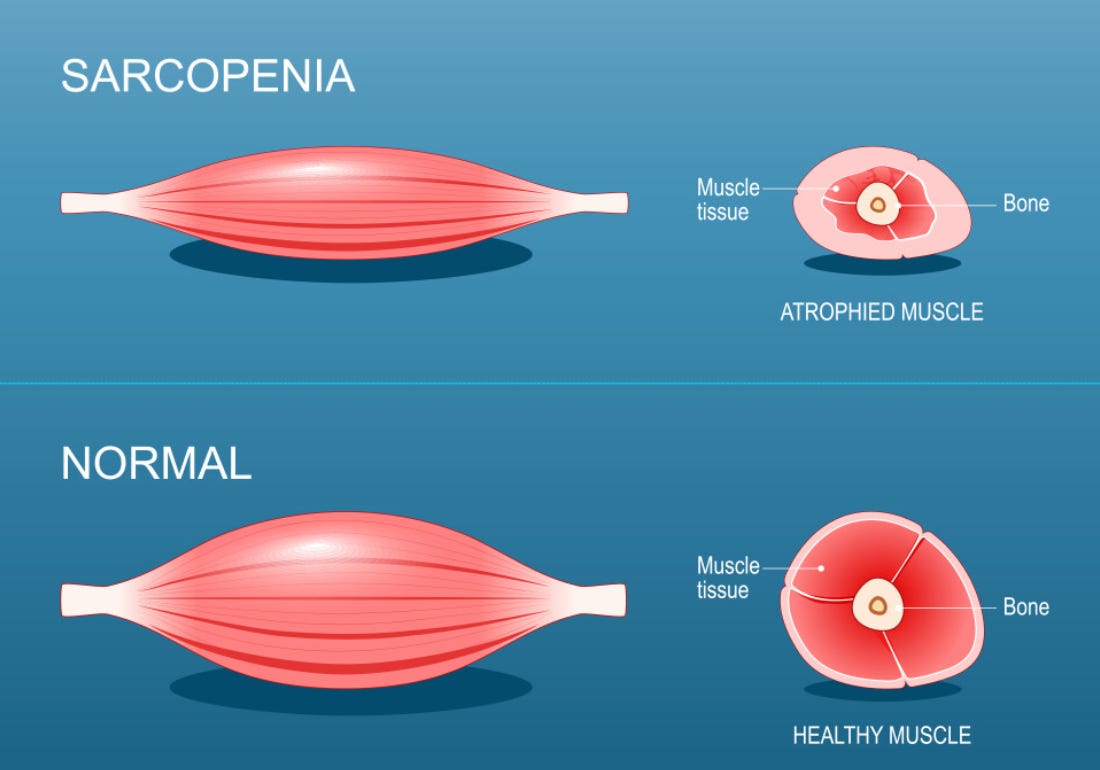
What is Sarcopenia?
Sarcopenia is defined as the progressive, age-related loss of muscle mass and function – estimated at 3-8% per decade after the age of 30 years (roughly 2% per year)1.
In your 50s the rate of muscle mass loss is ~2%, by your 70s it is a staggering 8%. The decline in muscle strength is almost double the loss in mass, ~4% in your 50s and ~12% in the 70s.
An 80 year old is predicted to have lost 40% of the muscle mass they had in their 20s.
More than a third of adults over 60 years have significant sarcopenia.
Several factors are in play; less physical activity, lower intake of dietary protein, a decline in hormone levels, chronic inflammation, mitochondrial dysfunction, infiltration of fat into muscle and insulin resistance.
Sudden health events like weeks in bed due to illness of injury leads to a step decline in muscle loss2.
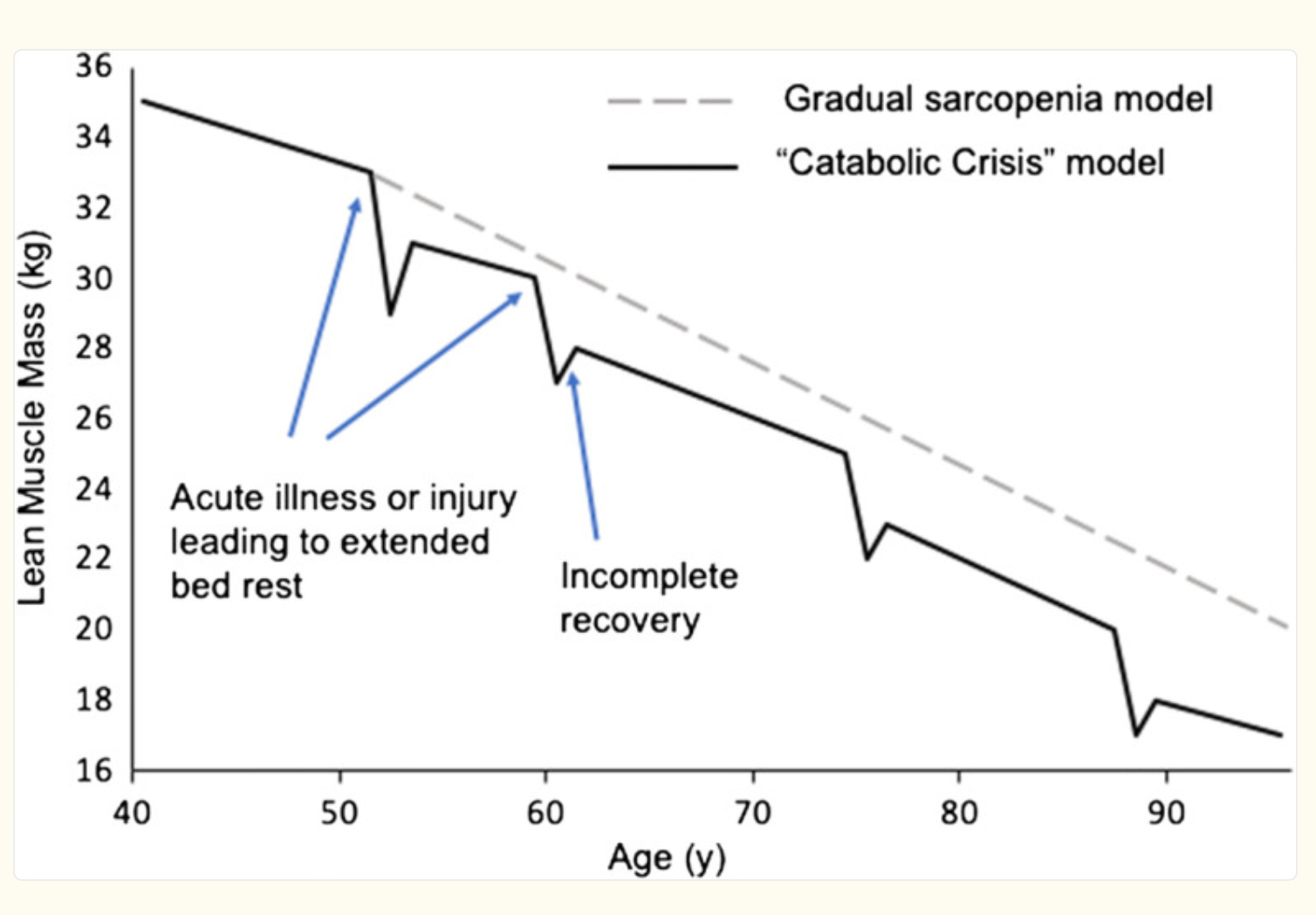
Think of muscle fibres as the strands of hair in a ponytail. As we get older, the hair not only gets thinner, we also lose a lot more hair. And we grow fewer new hair.
Using that analogy, imagine the bicep muscle is the ponytail. Over time the we lose some of the many fibres that make up the bicep muscle. The fibres themselves also get a little thinner. And we are not as good at making new or stronger muscle fibres. Where hair is mostly keratin (a type of protein), muscle is 70% water and 30% protein.
[It gets a little bit more complicated when we consider the distinction between fast and slow twitch fibres. Research by Grosicki et al. (2022) showed that we predominantly loose the fast twitch fibres and maintain most of the slow twitch fibres3. We lose ability to generate explosive power. I save this for a future post.]
Sarcopenia matters because muscle function determines independence as you get older 4. Having the strength and mobility to handle everyday tasks—like getting out of a chair unassisted, lifting groceries, reaching for items on high shelves, climbing stairs, and quickly steadying yourself to prevent a fall—makes daily life smoother and more enjoyable.
Maintaining muscle function is you key to independence as you age.
Our bodies are continually breaking down damaged and old fibres, making new fibres and repairing damaged muscle in order to maintain functional movement. The more demand we place on muscle - movement and exercise - the more muscle fibres respond in a positive way. In other words “use it or lose it”.
We used to think that is more difficult to build muscle as we get older. This is called anabolic resistance: building and maintaining muscle is more difficult to achieve despite the same muscle building stimulus from resistance training and protein ingestion.
How do we make muscle fibres?
In a very simplistic way, making new and/or stronger muscles requires two things:
an external signal in the form of exercise (resistance exercise is a stronger signal)
an internal signal in the form of the protein, specifically the amino acid leucine.
Resistance training is well accepted as the first line of defence against age related muscle loss 5 but adherence can be low. Many, many research studies show that older adults increase muscle mass and strength.

We also need to eat more than adequate protein to stimulate muscle repair and building. Specifically, we need enough of the amino acid leucine6.
Amino acids are the building blocks for proteins, like different coloured Lego blocks.
You cannot build a house without bricks. Amino acids are the bricks that build muscle.
Protein is not only required for muscle synthesis - every cell signal and function relies on protein, from making new skin, neurotransmitters, insulin, immune cells and much more. In a way your muscles are the storage depot for protein. If you do not get enough protein in your diet, your body will break down muscle tissue to get it.
To overcome the inevitable anabolic resistance of ageing, the protein quality and leucine content and bioavailability becomes increasingly important to prioritise in the diet.
How much protein is enough to maintain muscle?
There are heated debates about the optimum protein intake for adults, not only in scientific research but also in the public sphere. The intake level needed to avoid risk of deficiency and disease is called the Recommended Dietary Intake (RDI)* – it is the amount of nutrient intake required to keeps you out of hospital.
For adults, the protein (RDI) is generally accepted as 0.8 g/kg body weight with adjustments for age and gender see Table 1.
It opens the question about the optimum intake for protein. After all, we aim to live a better life than merely staying out of hospital.

Multiple studies have proposed that 0.8g/kg is too low for many population groups and adults may benefit from higher intakes as well as better quality protein.
RDI is the minimum intake for a nutrient (protein in this case) to keep you alive. It is not the maximum nor optimum intake for thriving and performing.
Framed a differently, the acceptable range of protein intake is 10-35% of total energy intake, or 0.8-2.5 g/kg 7(14).
To put this in perspective, for an adult weighing 70kg the protein intake range is 56-175g per day.
It is important to point out here that this is grams of protein content, not the weight of the food. One egg has ~7g protein and a lean sirloin steak weighing 150g has a protein content of 46g.
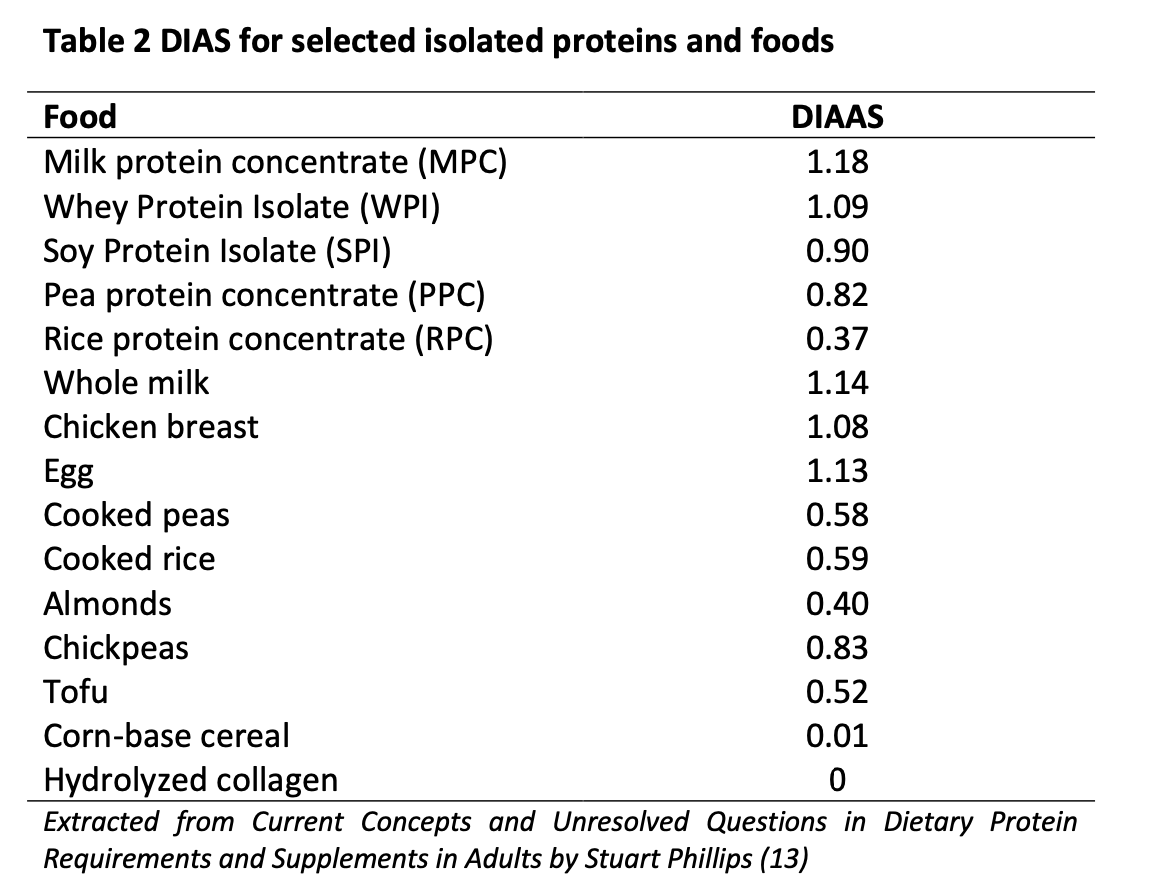
Protein quality depends on the combination of essential amino acids and the digestibility. The DIAAS (digestible indispensable amino acid score) is used the rank protein quality in terms of essential amino acid content in mg/g of protein 8(11). A score of 75-100% is considered good food source of essential amino acids. The highest DIAAS scores are found in isolated protein supplements like whey and soy 9(12). Many factors like, fibre content, can lower the digestibility of protein in foods.
Table 2 lists a few well-known protein supplement powders and whole food sources 10(13) according to the DIAAS score. There are nine amino acids classified as essential because they cannot be synthesised by the body11. We have to obtain these essential amino acids from out diet. If one or more essential amino acid is absent from the food source, the DIAAS score is reduced. This is the case for collagen powders, where the limiting (absent) amino acid is tryptophan. Hence collagen cannot be considered a replacement for protein. I wrote about collagen previously here.
How much leucine and where do you get it?
Various studies have shown that a leucine content of >2.5g/meal is required for the muscle restorative impact of leucine 12 13 14 15( 2, 3, 6-8). An adult of 70kg, this is roughly 7.5g of leucine per day – more than double the RDI 16(9).
Animal protein foods have a higher percentage of leucine content compared to plant sources (12% in whey protein and 6% in grains) 17(10).
On average, the leucine content for food sources is around 8%. This means roughly 30g of high-quality protein per meal is required to stimulate muscle protein synthesis.
Table 3 shows protein and leucine content for common food in everyday serving sizes.

What can you do?
I do not propose that you look up the leucine content of every food you eat. If you eat sufficient quantity and quality protein, the leucine content will take care of itself.
Many people do not eat enough protein for breakfast and leave the protein for dinner.
If you eat a lot of protein at night, your sleep can suffer. In the process of digesting protein our bodies generate more heat than it does for carbohydrates and fat. The increase in body heat will reduce your sleep quality.
It is very difficult to eat the desired quantity of protein only in one meal.
If you suddenly increase protein containing foods without changing anything else in your diet, you may end up with a calorie surplus. This can lead to weight gain. You may need to reduce the total quantity of your usual foods to stay weight stable.
This may happen without effort on your part, because a higher protein diet will increase your satiety. You will be less hungry and reduce cravings for snacks.
Our satiety signals are not only regulated by the protein content of our foods, our psychology plays a big role. Your brain might not be happy with a meal if you suddenly stop eating the thing you have had for breakfast for over 20 years.
I advise my clients to think of their meal consisting of “body-food” and “brain-food”. Something that is good for your body (protein) and something that makes your brain happy (cereal and yoghurt). Fortunately, your “brain-food” does not have to be a lot of food. Even a few mouth fulls of your favourite yoghurt and 1/2 a fruit will be enough to make your brain happy.
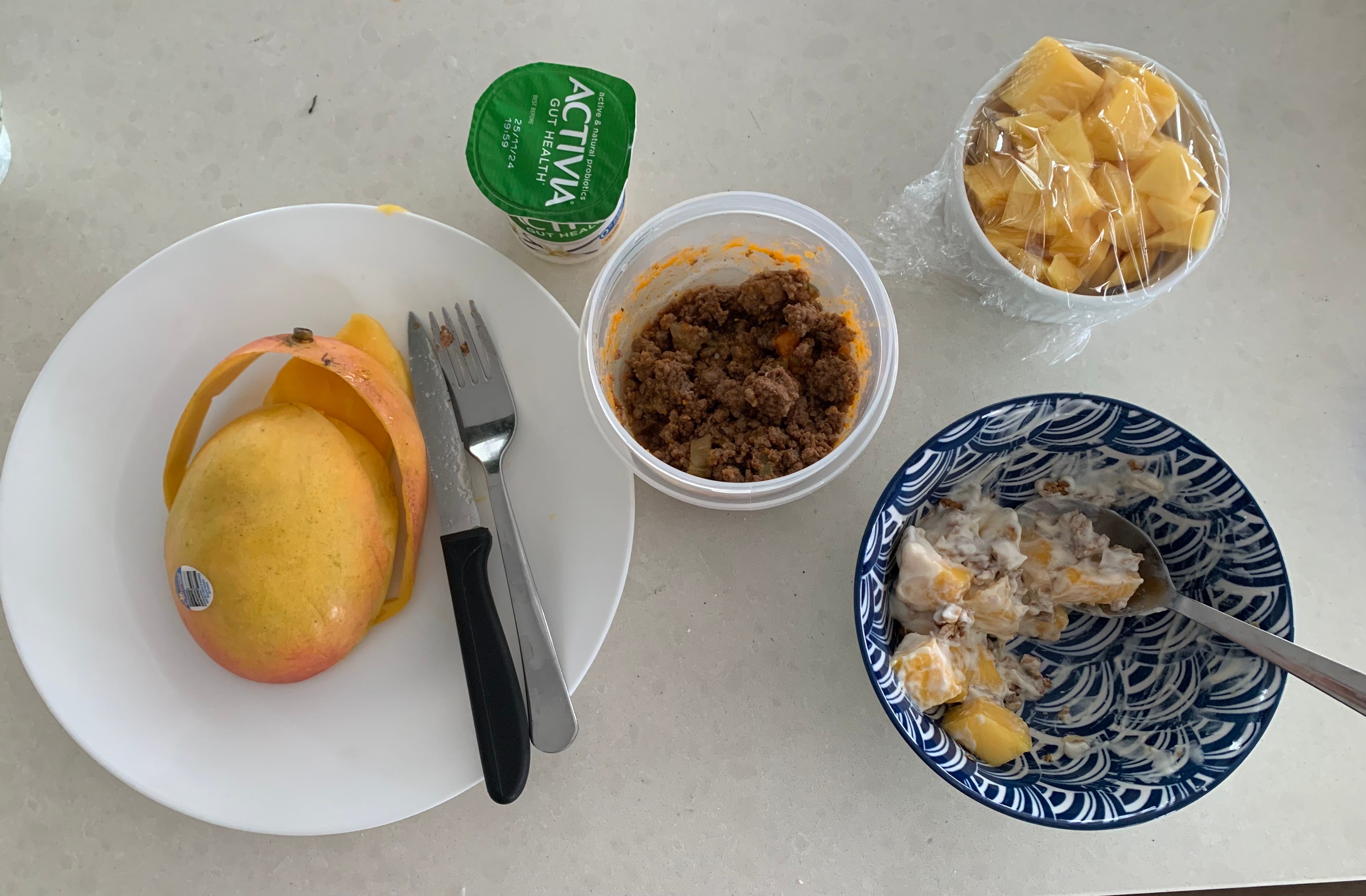
My favourite breakfast is 100g beef mince or chicken, followed by Bircher Muesli and yoghurt. The protein quantity stays the same but I increase or decrease the Muesli according to my activity levels.
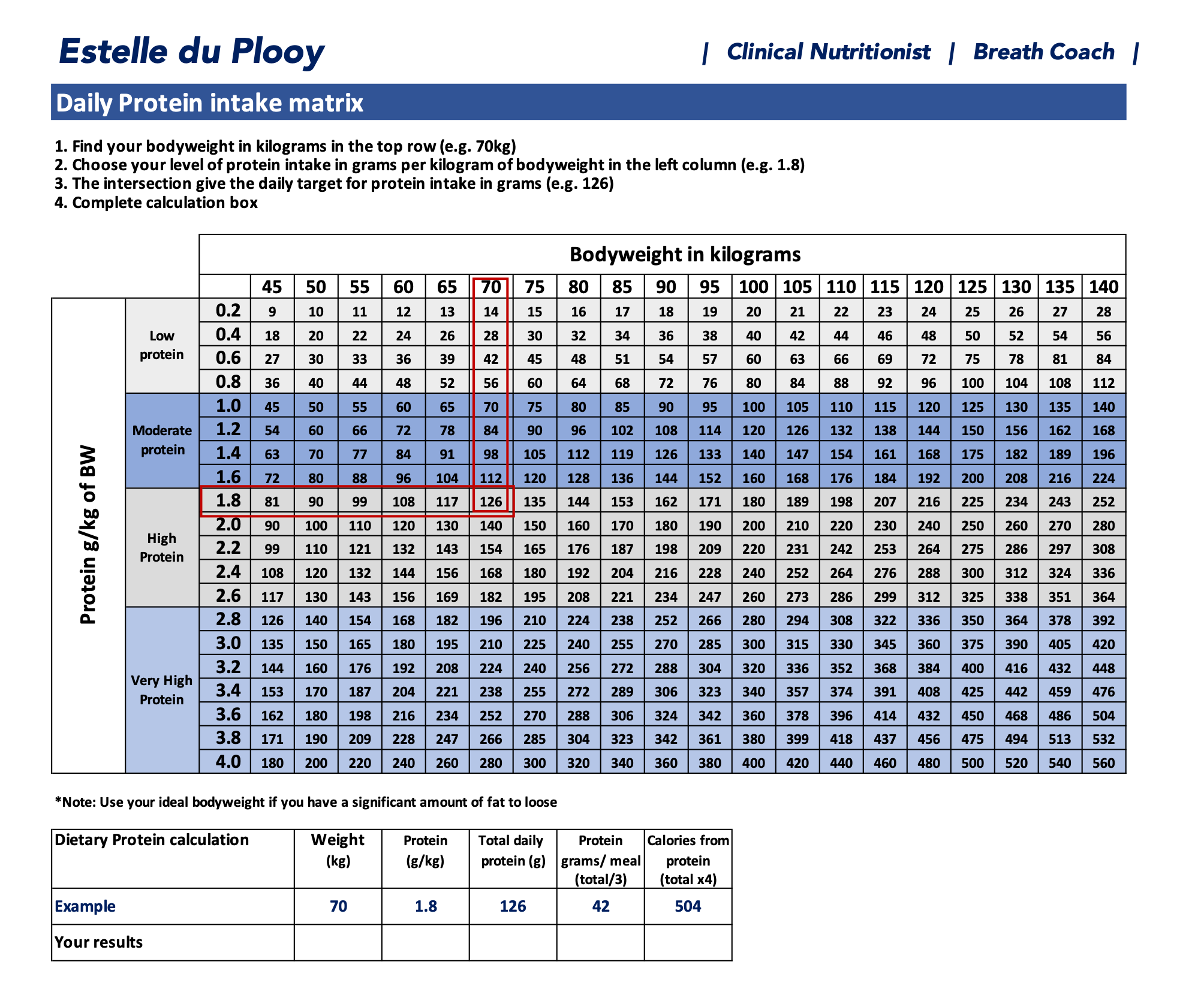
I designed a free handout to help you determine an optimal protein content for your body weight in g/kg (click here) and in g/lb (click here). You do not have to eat more than 1.8g/kg per day for longevity and healthy ageing.
In short:
Aim for 1.2-1.8g/kg of body weight
Prioritise protein at every meal.
Aim to eat 20-40g of protein per meal.
Do not have a huge quantity of protein at dinner.
Reduce the “brain-food” quantity a little bit
Track your protein intake for 1-2 weeks to help your learn how much you are actually eating.
Print the Daily Protein Intake Matrix.
If you have kidney disease, check with your doctor before changing your diet.
Final thoughts
Observational studies show that a higher protein intake is associated with increase in lean mass and better physical function and the effect is more pronounced in females (Gregorio et al. 2014). This translates to a reduced risk of developing osteoporosis and fracture from falling 18(17).
Physical function was improved with supplementation even in older adults with compromising conditions 19(18).
Other research has shown that muscle mass decline with diets that contain the RDI protein content 20 21(19, 20). The RDA is insufficient for older adults to offset effect of age related anabolic resistance (Phillips et al. 2020).
In other words, the 0.8g/kg of body weight is not enough to maintain muscle mass.
Protein, together with adequate calcium and vitamin D, is protective for bone health.
There is a myth that “too much protein” will damage your kidneys. This is not true for people with healthy kidney function. Even for people with kidney disease, protein is important. If you are concerned, please check with your doctor before changing your diet.
There is no evidence that ‘too much’ protein will lead to bone loss or decrease in renal function 2223242526272829.
Thanks for reading
Estelle
*Note: for easy reading in this article muscle mass refers to skeletal muscle mass.
* Confusingly US/Canadian terminology use Recommended Dietary Allowance (RDA).
About Estelle
Estelle’s early career was in financial modelling and reporting in the mining industry. Estelle’s growing interest in health and medical science led to a change direction and she completed a Bachelor of Biomedical Science at the University of Newcastle in 2017. To use this knowledge in a more practical and client focus way, she completed her Bachelor of Health Science Nutrition & Dietetic Medicine in 2020. She is also a qualified breath coach. These formal qualifications inform her philosophy about health, nutrition, breathing and influence her clinical focus.
References:
Anton SD, Woods AJ, Ashizawa T, Barb D, Buford TW, Carter CS, et al. Successful aging: Advancing the science of physical independence in older adults. Ageing Res Rev. 2015;24(Pt B):304-27.
English KL, Paddon-Jones D. Protecting muscle mass and function in older adults during bed rest. Curr Opin Clin Nutr Metab Care. 2010 Jan;13(1):34-9. doi: 10.1097/MCO.0b013e328333aa66. PMID: 19898232; PMCID: PMC3276215.
Grosicki GJ, Zepeda CS, Sundberg CW. Single muscle fibre contractile function with ageing. J Physiol. 2022 Dec;600(23):5005-5026. doi: 10.1113/JP282298. Epub 2022 Nov 9. PMID: 36268622; PMCID: PMC9722590.
Gregorio L, Brindisi J, Kleppinger A, Sullivan R, Mangano KM, Bihuniak JD, et al. Adequate dietary protein is associated with better physical performance among post-menopausal women 60-90 years. J Nutr Health Aging. 2014;18(2):155-60.
Phillips SM, Chevalier S, Leidy HJ. Protein “requirements” beyond the RDA: implications for optimizing health. Applied Physiology, Nutrition, and Metabolism. 2016;41(5):565-72.
Devries MC, McGlory C, Bolster DR, Kamil A, Rahn M, Harkness L, et al. Leucine, Not Total Protein, Content of a Supplement Is the Primary Determinant of Muscle Protein Anabolic Responses in Healthy Older Women. The Journal of nutrition. 2018;148(7):1088-95.
Wolfe RR, Cifelli AM, Kostas G, Kim I-Y. Optimizing Protein Intake in Adults: Interpretation and Application of the Recommended Dietary Allowance Compared with the Acceptable Macronutrient Distribution Range. Advances in nutrition (Bethesda, Md). 2017;8(2):266-75.
Nations FaAOotU. Dietary protein quality evaluation in human nutrition. Report of an FAO expert consultation. FOA Food and Nutrition Paper 92. 2013.
Agropur US. PDCAAS to DIAAS: A new way to look at protein quality. USA [Available from: https://www.agropuringredients.com/pdcaas-to-diaas-a-new-way-to-look-at-protein-quality/.
Phillips S. Current Concepts and Unresolved Questions in Dietary Protein Requirements and Supplements in Adults. Frontiers in Nutrition. 2017;4.
Lopez MJ, Mohiuddin SS. Biochemistry, Essential Amino Acids. [Updated 2024 Apr 30]. In: StatPearls [Internet]. Treasure Island (FL): StatPearls Publishing; 2024 Jan-. Available from: https://www.ncbi.nlm.nih.gov/books/NBK557845/#
Phillips SM, Paddon-Jones D, Layman DK. Optimizing Adult Protein Intake During Catabolic Health Conditions. Advances in Nutrition. 2020;11(4):S1058-S69.
Phillips SM, Chevalier S, Leidy HJ. Protein “requirements” beyond the RDA: implications for optimizing health. Applied Physiology, Nutrition, and Metabolism. 2016;41(5):565-72.
Katsanos CS, Kobayashi H, Sheffield-Moore M, Aarsland A, Wolfe RR. A high proportion of leucine is required for optimal stimulation of the rate of muscle protein synthesis by essential amino acids in the elderly. Am J Physiol Endocrinol Metab. 2006;291(2):E381-7
Murphy CH, Saddler NI, Devries MC, McGlory C, Baker SK, Phillips SM. Leucine supplementation enhances integrative myofibrillar protein synthesis in free-living older men consuming lower- and higher-protein diets: a parallel-group crossover study. The American Journal of Clinical Nutrition. 2016;104(6):1594-606.
Bauer J, Biolo G, Cederholm T, Cesari M, Cruz-Jentoft AJ, Morley JE, et al. Evidence-based recommendations for optimal dietary protein intake in older people: a position paper from the PROT-AGE Study Group. J Am Med Dir Assoc. 2013;14(8):542-59.
Gorissen SHM, Crombag JJR, Senden JMG, Waterval WAH, Bierau J, Verdijk LB, et al. Protein content and amino acid composition of commercially available plant-based protein isolates. Amino Acids. 2018;50(12):1685-95.
Isanejad M, Mursu J, Sirola J, Kröger H, Rikkonen T, Tuppurainen M, et al. Association of protein intake with the change of lean mass among elderly women: The Osteoporosis Risk Factor and Prevention - Fracture Prevention Study (OSTPRE-FPS). J Nutr Sci. 2015;4:e41.
Avenell A, Smith TO, Curtain JP, Mak JC, Myint PK. Nutritional supplementation for hip fracture aftercare in older people. The Cochrane database of systematic reviews. 2016;11(11):Cd001880.
Campbell WW, Trappe TA, Jozsi AC, Kruskall LJ, Wolfe RR, Evans WJ. Dietary protein adequacy and lower body versus whole body resistive training in older humans. J Physiol. 2002;542(Pt 2):631-42.
Mitchell CJ, Milan AM, Mitchell SM, Zeng N, Ramzan F, Sharma P, et al. The effects of dietary protein intake on appendicular lean mass and muscle function in elderly men: a 10-wk randomized controlled trial. Am J Clin Nutr. 2017;106(6):1375-83.
hams-White MM, Chung M, Du M, Fu Z, Insogna KL, Karlsen MC, et al. Dietary protein and bone health: a systematic review and meta-analysis from the National Osteoporosis Foundation. Am J Clin Nutr. 2017;105(6):1528-43.
Shams-White MM, Chung M, Fu Z, Insogna KL, Karlsen MC, LeBoff MS, et al. Animal versus plant protein and adult bone health: A systematic review and meta-analysis from the National Osteoporosis Foundation. PloS one.2018;13(2):e0192459.
Devries MC, Sithamparapillai A, Brimble KS, Banfield L, Morton RW, Phillips SM. Changes in Kidney Function Do Not Differ between Healthy Adults Consuming Higher- Compared with Lower- or Normal-Protein Diets: A Systematic Review and Meta-Analysis. The Journal of nutrition. 2018;148(11):1760-75.
Van Elswyk ME, Weatherford CA, McNeill SH. A Systematic Review of Renal Health in Healthy Individuals Associated with Protein Intake above the US Recommended Daily Allowance in Randomized Controlled Trials and Observational Studies. Adv Nutr. 2018;9(4):404-18.
Schwingshackl L, Hoffmann G. Comparison of high vs. normal/low protein diets on renal function in subjects without chronic kidney disease: a systematic review and meta-analysis. PloS one. 2014;9(5):e97656.
Surdykowski AK, Kenny AM, Insogna KL, Kerstetter JE. Optimizing bone health in older adults: the importance of dietary protein. Aging health. 2010;6(3):345-57.
Groenendijk I, den Boeft L, van Loon LJC, de Groot L. High Versus low Dietary Protein Intake and Bone Health in Older Adults: a Systematic Review and Meta-Analysis. Comput Struct Biotechnol J. 2019;17:1101-12.
Bilancio G, Cavallo P, Ciacci C, Cirillo M. Dietary Protein, Kidney Function and Mortality: Review of the Evidence from Epidemiological Studies. Nutrients. 2019;11(1).